청정도는 많은 산업, 제약 및 의료 장비 분야에서 매우 중요합니다.
청정도는 모든 제품 공정과 기술 구성요소의 기능 생명 주기에 영향을 미칠 수 있으며 모든 제품은 잔여물과 입자 검출에 대한 특정한 요구 사항을 가지고 있으므로 궁극적으로 제품 및 생산 공정의 품질 개선을 위해 사용될 수 있습니다.
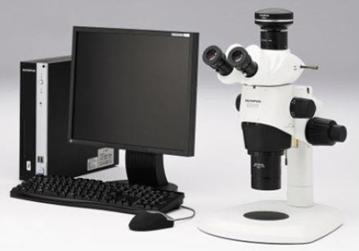
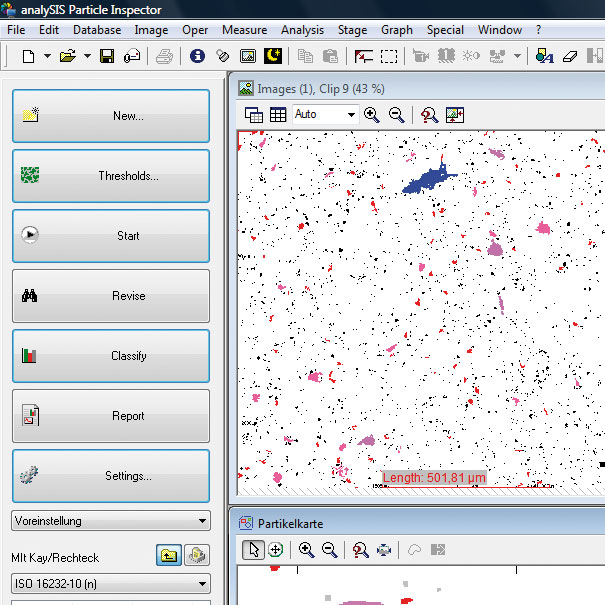
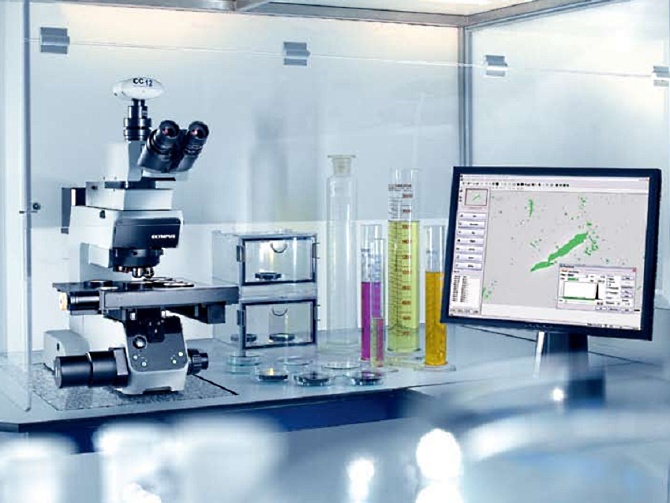
올림푸스 “Particle Inspector” 는 완전히 자동화된 입자 분석, 분류 및 문서화에 대한 포괄적인 시스템입니다. 이 시스템은 현미경, 디지털 카메라 와 컨트롤러를 포함한 전동 스테이지 그리고 입자 분석 소프트웨어로 구성되어 있습니다. 입자의 임계값 기반의 평가는 입자의 영역, 크기, 형상, 위치, 밀도와 휘도와 같은 입자의 특정한 측정 항목을 제공하며 제한되어 선택된 영역 및 개체 분류로 평가할 수도 있습니다. 프레임 독립 검출은 복잡한 데이터 설정들을 최소화하면서 필드 밖의 입자들을 합쳐 주고 정확하게 정량화 합니다.
또한 올림푸스 자동화 필터 검사 시스템, 자동화된 입자 분석 시스템은 여러 가지 스캔 경로 및 예측 포커스 지도 정의 뿐만 아니라 추가적인 측정 항목들도 고려합니다. 현미경은 BX 정립형 현미경 (고 분해능 및 1마이크로미터보다 큰 작은 입자의 인식을 위해서) 과 SZX 연구용 실체 현미경 (큰 입자 및 빠른 검사를 위해)을 사용합니다.
Features and Benefits:
Fast, accurate and repeatable particle counting and classification
Hands free operation requires no operator intervention
Fully automated with integrated microscope, camera, stage and software
Automated background correction
Flexible detection for particles down to the micron level
Complete archiving of all data
Automated report generation
International standards compliant : VDA 19, ISO 16232-10, ISO 4406/4407, NF-E-48-651/655, STD 107-0002, US 788
Microscopy in bioscience has progressed from the purely structural characterisation of fixed cells towards the investigation of processes in living cells with recent advances in fluorescence technology. Static morphological observation can now be complemented by the characterisation of the 3-D architecture of cellular structures and the real-time investigation of dynamic molecular processes in living cells. Newly developed fluorescence methods such as TIRF and FRET microscopy or GFP labelling are pushing the frontiers and widening the scope of bio-imaging.
Time-lapse Imaging
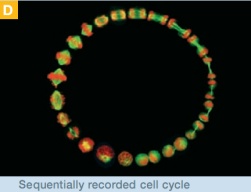
Dynamic processes such as cell growth, metabolic transport and signal transduction are monitored routinely nowadays. The duration of such processes may vary from the sub-second range to hours or even days. Consequently it may be necessary to take several images per second or just one image every couple of minutes.
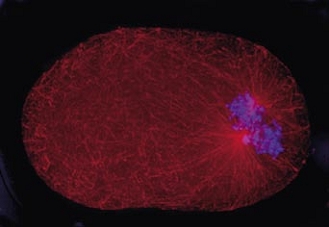
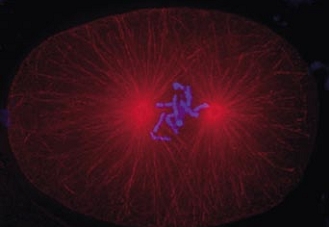
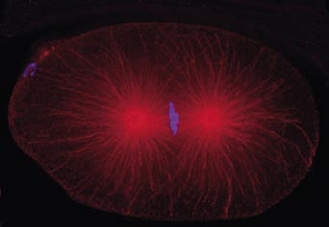
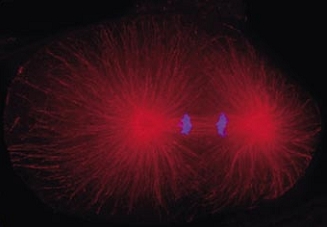
Cell division in the early C. elegans embryo, microtubules in red, DNA in blue.
Courtesy of K. Oegema, T.Hyman group, Max-Planck Institut, Dresden, Germany.
Multi-colour and GFP Imaging
The development of a growing list of specific fluorochromes covering the entire colour range enables the scientist to image and distinguish different sub-cellular structures simultaneously within one experiment through the use of multiple staining. If this is combined with time-lapse acquisition, the illumination unit of the microscope must be able to switch quickly between excitation wavelengths
Z-sectioning and Multi-dimensional Imaging
Microscopy is basically a two-dimensional observation technique while biological samples are three-dimensional. Therefore, in order to map the entire volume of the specimen, it can be imaged in layers by moving the focal plane in precise steps using a motorised Z-drive or a piezo-electric objective drive.
Ion Imaging / Ratio Imaging / Ca++ Imaging
The fluorescence behaviour of several dyes is dependent on the concentration of certain ions such as calcium (Fura-2) or on the pH value (BCECF). The detection,
quantification and analysis of changes in fluorescence intensity are thus an indirect means to study important physiological processes.
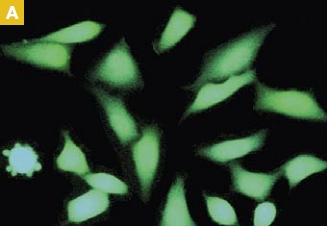
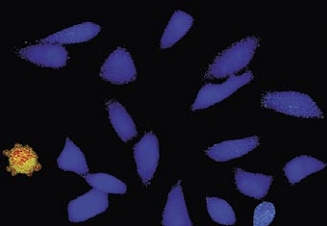
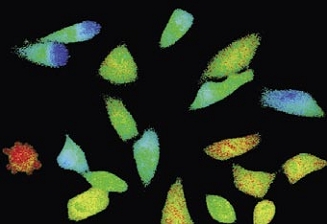
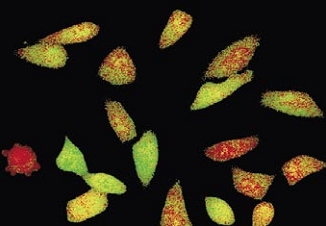
Time-lapse imaging:Fura2-labelled HeLa cells stimulated with APT.
Top : dual-excitation image; below; false-color ratio images revealing increasing calcium concentration.
FRET (Foerster Resonance Energy Transfer)
The measurement of fluorescence energy transfer from a fluorochrome molecule to an adjacent one can be used for the investigation of molecular interactions in cells. It requires the acquisition of images with different excitation and emission wavelengths and sophisticated correction algorithms.
Investigating surfaces without interference from background light can be carried out using Total Internal Reflection Fluorescence Microscopy. Laser light coupled together with the standard fluorescence excitation allows fast switching between TIRF and wide-field fluorescence applications and can even support simultaneous observation.
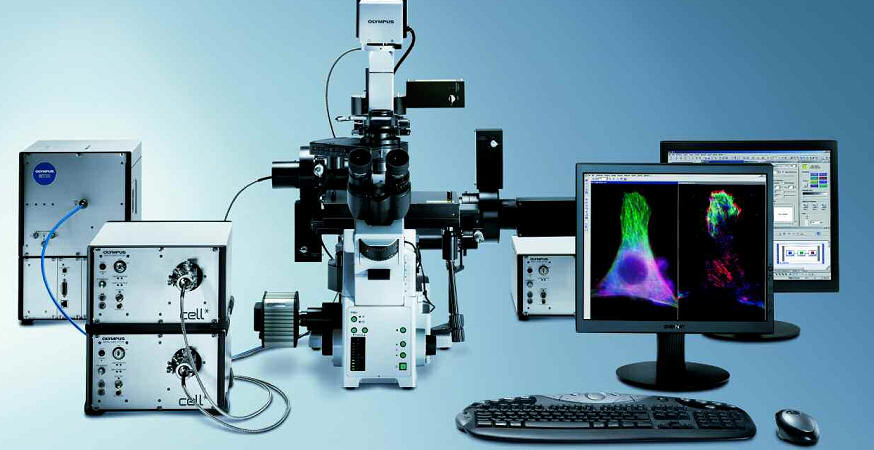
cell^tool TIRFM System
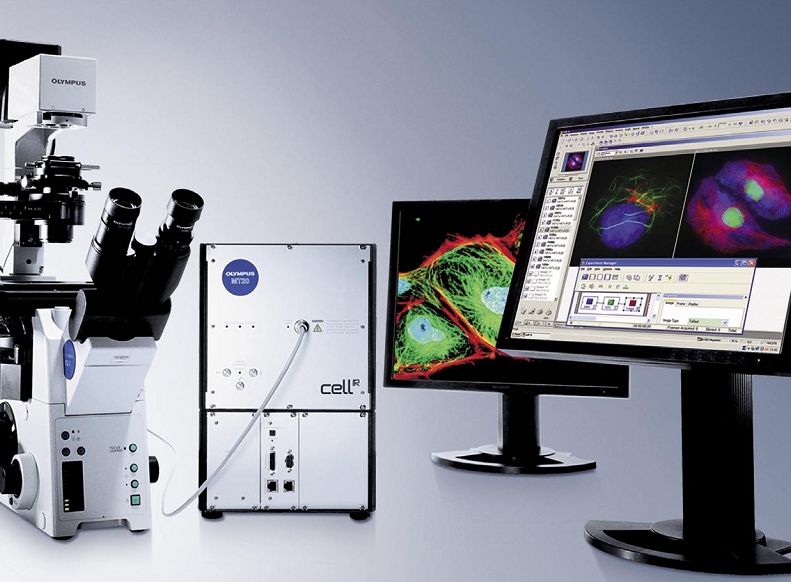
cell^tool TIRFM is based on a modular multi-port illuminator for up to three lasers and a MT10 or MT20 widefield fluorescence light source. This extension of the cell^M and cell^R imaging stations allows for laser based high resolution cell surface and membrane studies with the possibility of simultaneous widefield observation. The control of the TIRFM illuminator is integrated into the ‘Experiment Manager’ of cell^M and cell^R software, so in addition to highest quality TIRF observation cell^tool TIRFM offers all the powerful options of the cell* imaging stations.
The cell^tool TIRFM is available as a complete turn-key solution or as an add-on for existing cell^M or cell^R imaging systems.
Cell surface observation without out-of-focus blur Fully integrated into cell^M and ^R imaging stations Combination of up to three lasers plus a MT10/20 fluorescence illumination system Optimised beam alignment on individual laser ports
Single molecule fluorescence detection with TIRFM
Commencing as a challenging problem in physics with the first detection of a single fluorescent molecule in condensed phase at temperatures of liquid helium single molecule fluorescence detection has diversified into a collection of methods applied in various scientific disciplines.
With the advent of ultra sensitive detectors and optical instrumentation and by combination with confocal and TIRFM techniques single molecule detection developed into a feasible approach in life science. Decisive for this adaptability is the possibility to detect single molecule fluorescence at room temperature in solution (e.g. FCS) or on surface membranes of even living cells (TIRFM).
The following experiment conducted on an inverse microscope using the Olympus UAPO150xO/TIRFM objective is an example of the many applications for TIRFM single molecule fluorescence detection:
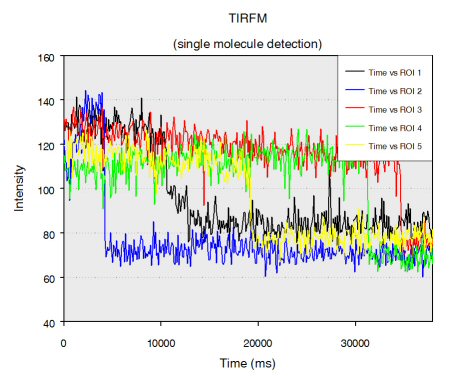
Single stranded RNA hybridised to a complementary biotinylated DNA, which was immobilised on a BSA-Biotin-Streptavidin coated cover glass. The RNA was mono-labelled with Cy3. Imaging of single molecules was confirmed by single step photo bleaching of the dye. Emission intensity plotted versus time decays immediately after bleaching a single dye molecule (ROIs 2-5), contrary to a group of fluorescent molecules whose emission would decrease in a multistep exponential manner (ROI 1).
Figure 1: Fluorescence intensity (colour coded. Circles mark five regions of interest (ROI). Each ROI (except of ROI 1) contains one single fluorescent molecule as verified by single step photobleaching: See movie with fluorescence intensity recorded over time (to download the film click on figure 1) and corresponding emission intensity curves plotted vs. time for the selected ROIs (Figure 2, bottom of the page).
Total internal reflection (=TIR)
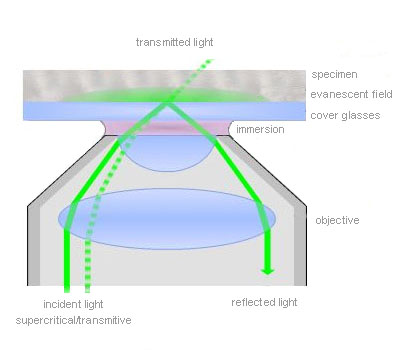
TIR is an optical phenomenon. If light is travelling through a medium with a high refractive index and strikes the interface of an optical medium with a lower refractive index at an angle greater than the critical angle, the incident light will undergo total internal reflection. Under these conditions some light still enters the low refractive index medium as an electromagnetic wave termed the evanescent wave. The intensity of this wave decays exponentially with penetration depth. The average z-expansion is less than 200 nm depending on the wavelength of light, the incident angle and the refractive index of the media. In TIRFM, fluorophores in the sample at a maximum distance of ~100 nm from the coverslip surface are selectively excited. This z resolution of 100 nm is one-fifth of an optical section obtained with a laser scanning confocal microscope. Therefore TIRFM is ideally suited for the observation of processes and structures on or close to the cell surface.
Total Internal Reflection Fluorescence Microscopy
Total internal reflection (=TIR) is an optical phenomenon. If light is travelling through a medium with a high refractive index and strikes the interface of an optical medium with a lower refractive index at an angle greater than the critical angle, the incident light will undergo total internal reflection. In biological investigations involving living specimen, these prerequisites are met if a laser beam travels through glass, for example a microscope slide (refractive index n = 1.52), towards an aqueous buffer solution or cell surface (n = 1.33 – 1.38). The beam is totally reflected at the interface between the glass and the medium or the cell surface respectively. But the reflected light generates an electromagnetic wave termed the evanescent wave which enters the low refractive index medium. The intensity of this wave decays exponentially with penetration depth along the z-axis. The penetration depth depends on the wavelength of light, the incident angle and the refractive index of the media. The thickness of the optical section that generates fluorescence under TIR can be adjusted by changing the incident angle and has a range between a few hundred and 50 nm at minimum. That is up to one-tenth of an optical section obtained with a confocal laser scanning microscope. Thus in TIRFM, fluorophores close to the coverslip surface can be selectively excited. As in confocal microscopy background fluorescence is nearly absent in TIRFM, because the fluorophore excitation is restricted to the focal plane of the objective. Therefore TIRFM gives high-contrast images of the cell surface with excellent signal-to-background ratio and is ideally suited for the observation of processes and structures on the cell surface and within or close to the plasma membrane.
In contrast, widefield fluorescence microscopy provides limited spatial resolution in z-direction because background fluorescence from outside the focal plane often impedes the detection of small or weakly fluorescent structures.
TIRFM does not require the rather expensive scanning microscope technique because it generates widefield illumination at the specimen surface. It can be performed relatively cost-efficient with inverted fluorescence microscopes equipped with a special episcopic fluorescence illuminator, special high NA objectives and a laser.
Confocal microscopy has the clear advantage in not being restricted to the optical section directly adjacent to the coverslip/specimen interface. However optical sections obtained by TIRFM can be up to one order of magnitude thinner than by confocal microscopy. Further-more, being a widefield technique, TIRFM comprises the considerable advantages of a higher acquisition speed as compared to scanning microscopy.
The TIRF Microscope
TIRFM is a widefield microscopy technique and consequently modified fluorescence microscope set-ups are used. Lasers are commonly employed as illumination sources because the light is coherent, polarised, intense and well collimated. If a special dual port epi-fluorescence condenser is used the change from widefield illumination with a standard arc lamp to the TIRF laser is rapid and straightforward and does not interfere with the beam alignment.
For TIRFM with inverted microscopes, the incident beam is focused off-axis at the objective back focal plane such that it passes the very periphery of the pupil of a highly refractive objective. The objective’s numerical aperture must be at least 1.38 to exceed the refractive index of a living cell. Thus the incident beam emerges from the front lens into the immersion oil in such a way that it reaches the glass/cell interface in a critical angle and undergoes total internal reflection. The off-axis position of the laser beam determines the incident angle and the depth of the evanescent field accordingly. The further off-centre the alignment is, the larger is the angle and the shallower is the evanescent wave.
Olympus offers a range of special TIRF objectives with very high numerical apertures (NA). There are three objectives available with a NA of 1.45 that can be used with conventional immersion oil and cover slips. With the PLAPON60xO/TIRFM-SP, the PLAPO100XO/TIRFM-SP or the new UAPO150xO/TIRFM-SP a penetration depth of the exciting wave around 100 nm is reached. The UAPO150xO/TIRFM is especially designed for single-molecule detection in TIRFM. The APO100XOHR features an unsurpassed NA of 1.65. To match the extreme high NA special high-refraction cover slips and special immersion liquid (diiodomethane) are required. Therefore the objective offers a unique short penetration depth of about 50 nm and high flexibility regarding the marginal angle available for TIR. The 60x and the 150x objec-tives have a temperature correction collar. Common plan apochromatic objectives like 100x with NA = 1.40 can also be employed for TIRFM, but they are less convenient due to the small angle that is available for the total internal reflection.
Applications
The visualisation of molecular interactions on surfaces is of fundamental interest in cell and molecular biology because many molecular transport and signal transduction processes are transmembrane incidents. Examples are binding and triggering of cells by hormones, neurotransmitters and antigens, cell adhesion to surfaces, electron transport in the membrane, cytoskeletal and membrane dynamics, cellular secretion events and vesicular fusion events with membranes. TIRFM is the perfect tool for visualisation of these processes. The extraordinary small depth of field of TIRFM assures that only surface-bound fluorophores are detected. Fluorophores in the surrounding medium remain invisible though they might be in rapid exchange and be present in large excess. This is different from normal widefield illumination where they would create overpowering background fluorescence.
During many experiments it might be desirable to switch rapidly between TIR illumination to observe the surface and standard epi-illumination to investigate the deeper layers of the specimen as well. For example, a transient process may involve simultaneous but not identi-cal processes in the membrane and the cytoplasm. The Olympus BioSystems dualport illuminator for combined TIR and widefield illumination allows the fast and synchronised alternation of the two techniques. The techniques of TIRFM, DIC and other microscopy techniques as FRET, FRAP and FLIM can also be combined.
Cell Software 소개
준비중입니다.
Cell Hardware 소개
Cell Hardware features
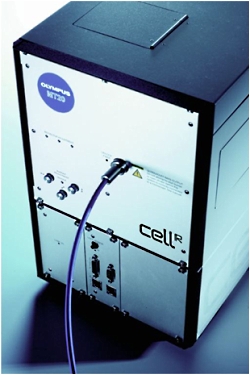
1. MT20 광원 장치
Cell 시스템에서 가장 중요한 장치 중 하나인 광원 장치는 MT20 광원 시스템을 사용합니다.
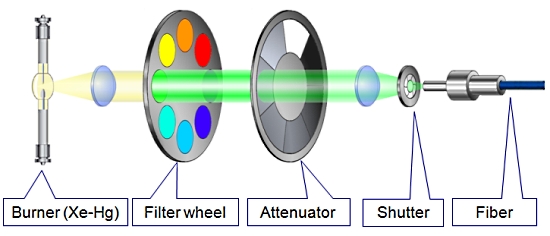
MT20 광원 장치는 두 가지 타입의 램프 (Xeneon 혹은 Xe/Hg)을 사용할 수 있으며 전원 장치가 내장되어 뛰어난 광량의 안정화를 이루었습니다.
또한 내장된 8개의 필터 장착 휠은 고속의 회전으로 즉각적인 필터 변경을 가능케 하며 14단계의 광량 감쇄기 휠 뿐만 아니라 1ms의 고속 셔터도 지원합니다.
MT20 만의 유일한 기능
1. 병렬 처리
– 필터 교체
– 셔터 개폐
– 광량 조절
시편의 Bleaching 감소를 가능하게 합니다.
2. 광원 소스의 안정성 증대
정량 분석에 필수적인 조건
3. 사용자 친화적
도구가 필요하지 않은 필터 장착
[ MT20 광원 시스템의 광학 설계 ]
2. 실시간 제어기 (Real-Time Controller)
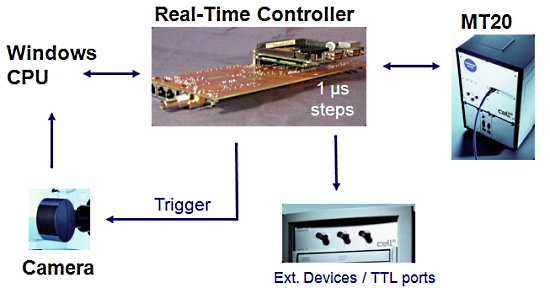
Cell 시스템에서 또 하나의 매우 중요한 장치로 이미징 워크스테이션 내의 실시간 제어기 (real time controller)보드가 있습니다.
이 실시간 제어기가 광원 장치, 카메라 및 현미경의 제어를 실시간으로 하드웨어적인 처리를 제어 함으로써 시편의 Bleaching을 극소화 할 수 있습니다.
또한 Time point 기반의 실험에서 1us 단위의 매우 정확한 Time point를 보증할 수 있게 하여 분석 결과의 신뢰성을 높여 줍니다.
[ 실시간 제어기의 이점 ]
A. 필터 휠 (Filter wheel)을 사용한 일반적인 이미징 시스템
하나의 이미지 쌍을 획득하는데 650ms 이상의 시간이 걸림
B. Cell^R 병렬 처리 시스템
Cell^R 실시간 처리기 사용시 최소 2배 이상 빠름
위의 처리 순서 비교 이미지를 보면 셔터 개폐 시간 10ms, 카메라 노출 시간 50ms, 카메라 Readout (데이터 전송) 시간 80ms, 필터 교체 시간 50ms 기준으로 두 시스템간의 차이를 비교 한 것입니다.
일반적인 순차 처리 방식의 시스템의 경우 PC에서의 지연 시간 및 필터 교체등에 의한 진동의 영향을 받게 됩니다.
Cell 시스템은 실시간 처리기를 사용함으로써 일반적인 순차적인 제어가 아닌 병렬적인 동시 제어가Hardware적으로 가능함을 알 수 있습니다.
이는 더 장시간의 더 많은 이미지를 Bleaching이나 Cell Dead가 없이 정량적 분석이 가능함을 나타내며 동일 조건시에 더 많은 노출 시간을 확보할 수 있음으로 카메라의 영상 품질의 향상 역시 기대할 수 있습니다.
위 이미지에서 샘플에 형광 Excitation이 노출 되는 시간을 비교하면 A의 경우 170msec, B의 경우 50msec 로 1/3 이하의 노출 만으로 동일한 조건의 이미지를 획득할 수 있게 됩니다.
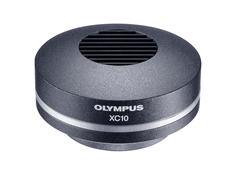
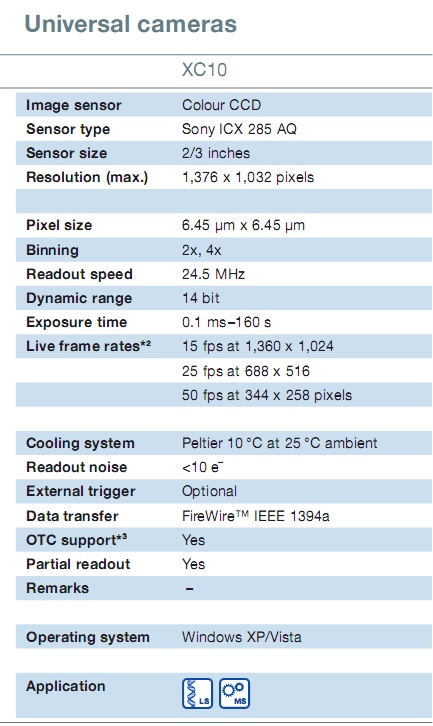
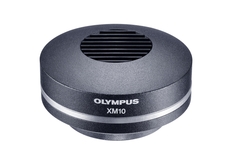
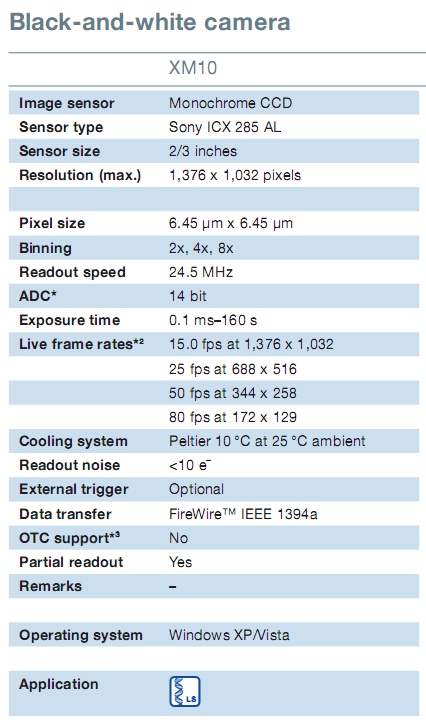
뛰어난 이미지 품질, 외부 트리거 기능과 장 노출 시간 – 이것들은 이 펠티어 냉각 칼라 카메라가 제공하는 많은 속성중의 단지 일부 입니다.
XC10은 1,376 x 1,032 픽셀의 CCD 칩을 내장하고 각 칼라 채널은 14 비트를 제공합니다. 2x 비닝 모드로 카메라는 초당 15 프레임보다 고속의 영상을 제공합니다.
이것은 XC10을 고속 영상 획득을 요구하는 어플리케이션에 대한 이상적인 카메라임 말합니다. 게다가 빠른 영상 전환은 샘플의 포커싱이나 관심 영역을 PC 스크린 상에서 찾을 수 있게 합니다.
이러한 CCD 센서에 의한 우수한 특성들은 펠티어 냉각과 결합하여 매우 낮은 잡음의 풍부한 디테일과 컨트라스트를 갖는 칼라 이미지를 가능하게 하며 최대 160초의 매우 긴 노출 시간을 설정 가능하게 합니다. 이는 카메라가 일반적인 형광 어플리케이션의 약한 신호 강도를 감지하는데 사용될 수 있습니다.
고 감도 (High sensitivity)
XC10은 1,376 x 1,032 픽셀의 해상도를 가집니다. 고 효율의 판독 기술 (더블 샘플링)은 CCD 센서의 펠티어 냉각과 결합하여 우수한 신호 대 잡음비의 이미지를 생성합니다. 고 감도 CCD 소자는 희미한 신호조차도 감지할 수 잇습니다. 전자 셔터는 0.1 milisecond 에서 160초에 이르는 범위의 다양한 노출 시간을 제공합니다.
고속 (High Frame rate)
전 14 비트의 동적 범위의 24MHz의 클럭 속도에서 작동하는 고속 ADC (아날로그 디지털 변환기)는 24.5MHz의 판독 속도에서도 더블 샘플링을 수행할 수 있습니다. 댜앙한 프레임 속도가 지원됩니다. 예를 들어, 2x 비닝 기능을 사용하여 TV 해상도에서 15 프레임 보다 고속의 획득을 설정할 수 있습니다. 편리하게 스크린상에서 포커스와 원하는 영역의 위치를 확대된 샘플을 볼 수 있습니다. 더 이상 품질을 위하여 속도를 떨어뜨릴 필요가 없습니다. 이는 형광 시편의 Bleaching을 막고 최적의 설정을 제공합니다.
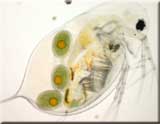
daphnia longispina (long-spined water flea) with eggs
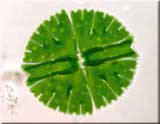
micrasterias rotata (a desmid – single-celled green algae)
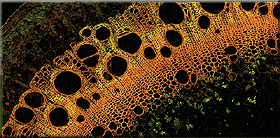
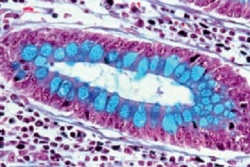
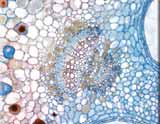
stem axis of tulipa gesneriana (garden tulip)
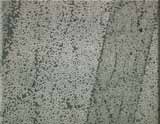
carbon fiber
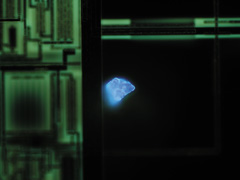
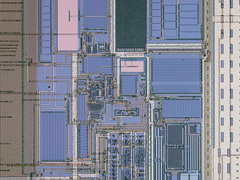
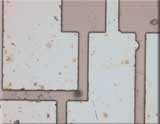
chip structure
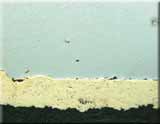
protective lacquer coating
Life Science 에 적합함을 나타냅니다. Material Science 에 적합함을 나타냅니다.
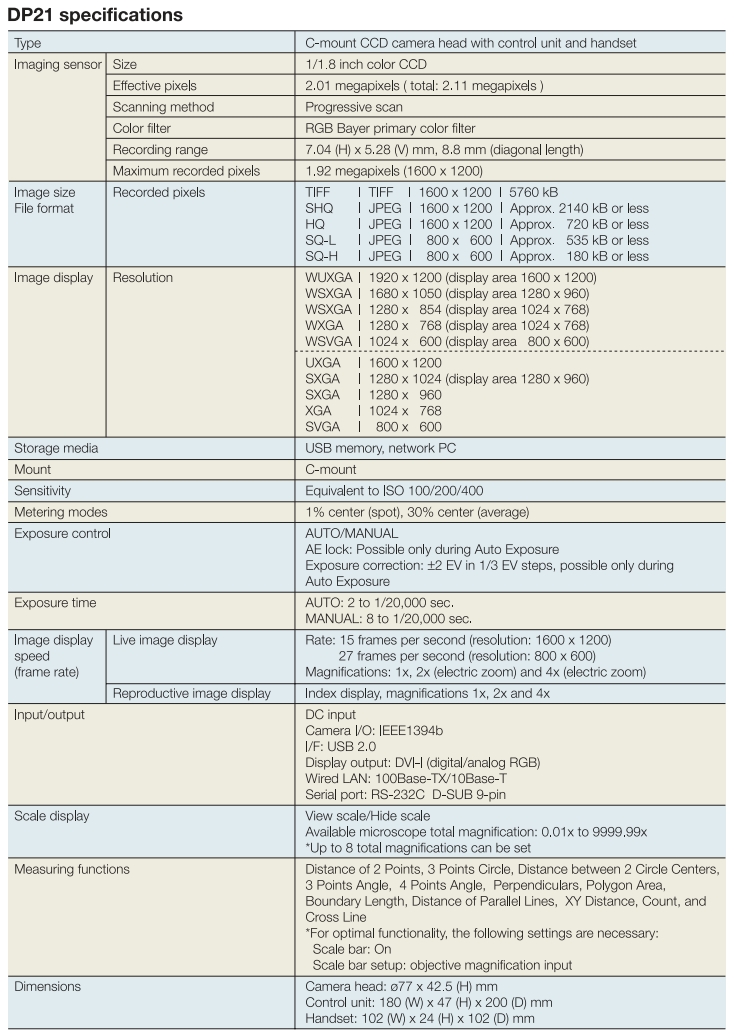
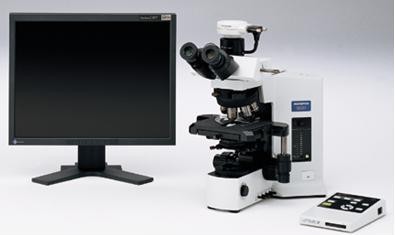
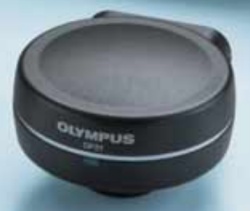
현미경을 위한 DP21 독립형 디지털 카메라는 매우 전문적인 프리젠테이션을 위한 고화질 이미지의 부드러운 실시간 이미지 출력을 가능하게 하는 동안 쉬운 관찰 초점 프래이밍과 저장을 가능하게 합니다.
· 초당 15 프레임의 부드러운 라이브 고화질 UXGA 출력
DP21은 LCD모니터와 프로젝터와 같은 디지털 기기들과 쉽게 연결 하여 라이브, 고화질 UXGA 이미지들을 전송합니다.
· 마우스와 다른 USB 장비를 연결
DP21의 컨트롤 유닛은 추가적인 용도를 위한 USB 포트를 제공합니다. 마우스와 키보드의 연결은 간단히 메모를 기록할 수 있습니다. 대용량 드라이브의 연결은 고 용량의 이미지를 저장 가능하게 합니다. 또한 DP21은 LAN 포트를 가지고 있어 캡쳐된 데이터를 쉽게 서버에 저장할 수 있습니다.
· 직접 PC 제어
옵션의 소프트웨어는 DP21의 PC 제어를 가능하게 합니다. 이는 컴퓨터에서 작업시 더욱 효율적인 작업을 가능하게 합니다.
· 12개의 측정 함수들이 검사 효율을 향상
모니터상에서 12 측정 함수들의 광범위한 선택이 가능합니다. 이러한 함수들 각각은 간단한 키보드 연산으로 즉시 접근 가능하고 데이터는 이미지와 함께 쉽게 저장할 수 있습니다.
부드러운 라이브 이미지 출력
– 모니터 포커싱이 간단합니다.
– 빠른 움직임 하에서도 이미지 품질이 유지됩니다.
완벽한 색상 일치
– 모니터상에 출력되는 이미지들은 현미경을 통해 보여지는 것과 비교할 만합니다.
독립형 편의성
– DP21은 전원을 킨 후에 즉시 사용할 수 있습니다.
– 사용하기 쉬운 핸드셋을 가진 독립형 컨트롤
Life Science 에 적합함을 나타냅니다 Material Science에 적합함을 나타냅니다
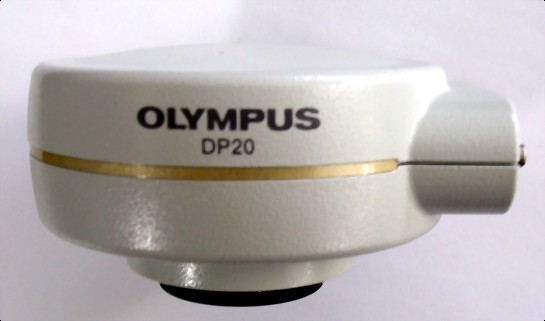
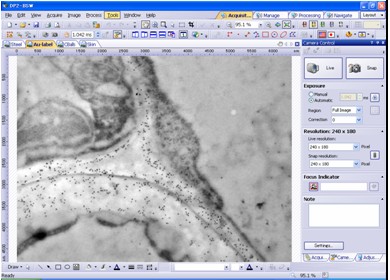
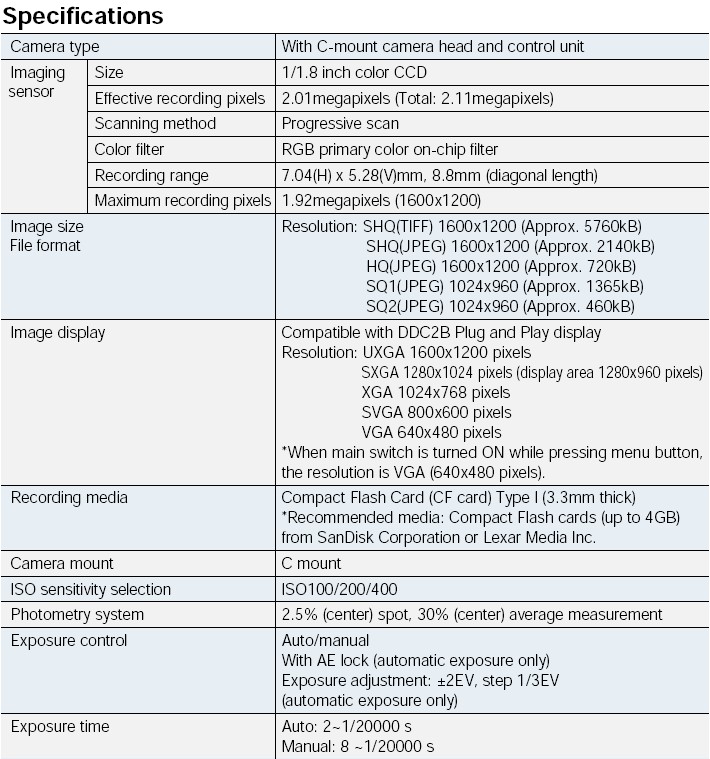
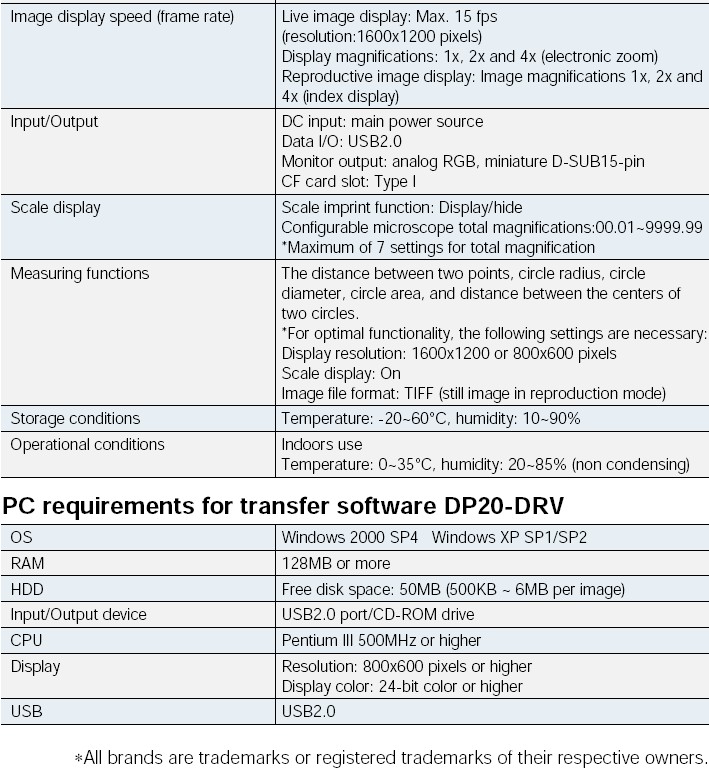
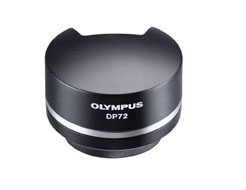
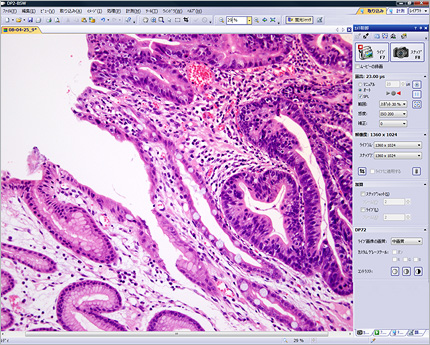
DP20 은 별도의 PCI 보드가 필요 없는 USB2.0 타입으로 편리하게 computer에 연결할 수 있습니다. 또한 별도의 프로그램과 computer가 없어도 바로 모니터에 연결하여 편리하게 사용할 수 있습니다. DP20은 200만 화소를 제공하며 live영상에서도 15frames/sec을 지원하고, DP12와 비슷한 가격으로 더 높은 수행능력을 지니고 있습니다. computer 와 함께 사용하기 위해서는 기본 SOFTWARE인 DP2-BSW를 사용해야 하며 이 software는 거리, 다각선, 사각형, 원 측정이 가능합니다. 또한 anaysis five와 함께 사용하면 보다 다양한 image analyzer의 기능을 수행할 수 있습니다.
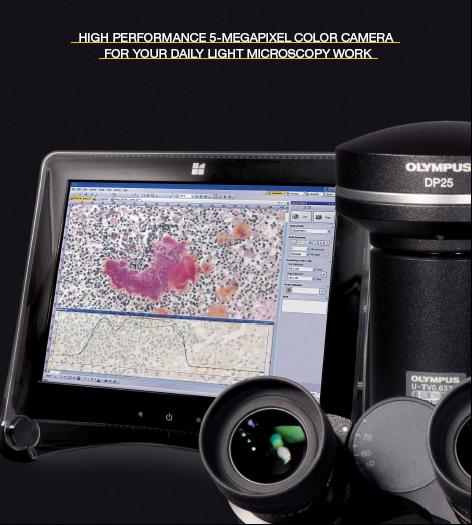
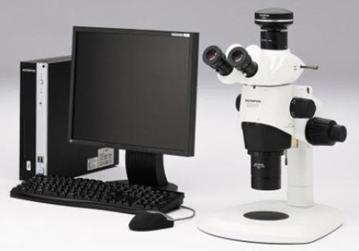
A HIGH PERFORMANCE 5-MEGAPIXEL COLOR CAMERA SYSTEM
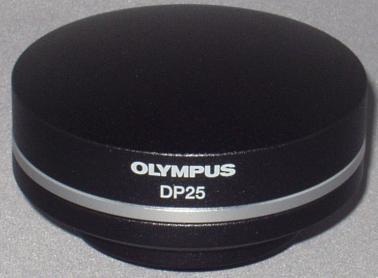
올림푸스의 DP25는 넓은 범위의 과학적인 현미경 이미지 수집을 위한 보고서 및 분석에 사용이 손 쉽게 조작가능한 디지털 카메라 입니다. 고 해상력, 빠른 Frame 속도 또한 색의 표현력이 우수하며 현미경 작업에 효과가 있음을 자신할 수 있습니다.
Features
* High resolution (5M Pixels)
* Fast frame rate (8fps at full resolution)
* Excellent fidelity
* Easy operation DP2-BSW
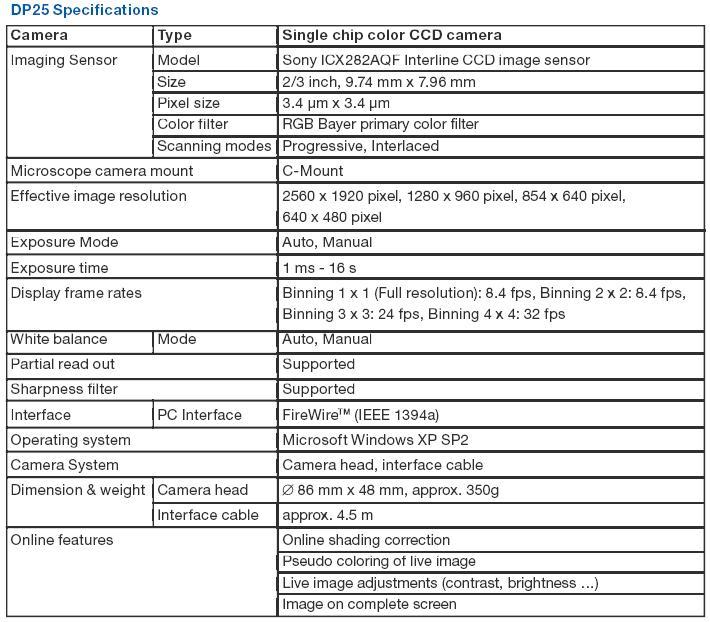
DP25 SPECIFICATION
Perfect images
Automatic exposure
Manual (e.g.brightness, contrast, gamma)
All acquired images are calibrated automatically
Descriptive data (e.g. camera parameters, magnification
Automatic saving
High frame rates
video-like resolution it delivers 30 frames per Second
Good color reproduction
Easy handling
Annotations and scale bar
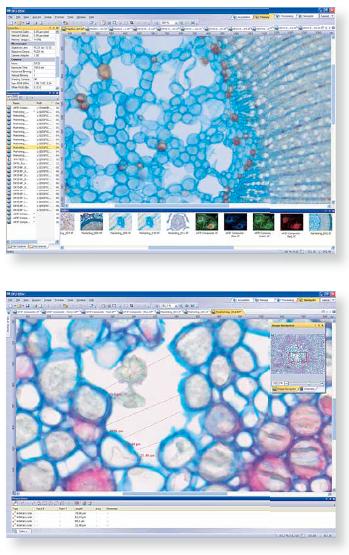
Interactive Measurements
Several functions for measuring live or still images, including Point measurements, arbitrary line, polygon, circle and ellipse or rectangle measurements, are integrated. For further processing the measurements can be exported to MS Excel with the simple click of a mouse.
“analySIS“제품은 세계적으로 유명한 독일의 영상분석 전문업체인 OLYMPUS Soft Imaging Solution(OSIS) 사에서 제작한 최첨단 영상분석 프로그램입니다.
OLYMPUS Soft Imaging Solution사는 1987년 설립된 후 2006년 4월 OLYMPUS의 일원이 되었고 광학 현미경 및 전자 현미경용 분석 소프트웨어 및 디지탈 카메라 제품을 포함한 영상분석의 모든 솔루션 제공하고 있으며 유럽을 중심으로 다양한 분야에 사용되어 전세계의 많은 영상 분석 전문가와 연구진에게 사랑과 신뢰를 받고 있습니다.
주로 셀 카운팅, 크기 측정, 형광 관찰, 미생물 관찰 등과 같은 기능을 지닌 의학, 생명공학용 image analyzer인 analySIS LS는 다음과 같은 등급으로 구성되어 있고, analySIS LS Report 이상의 등급부터 필요한 module을 추가하거나 제품을 upgrade할 수 있습니다.
LS STARTER : analySIS LS 의 첫 등급으로 형광 합성, 단순 측정과 같은 기능을 제공합니다.
LS REPORT : analySIS LS의 두번째 등급으로서 STARTER의 모든 기능과 data base, report 기능이 추가 되었습니다. 또한 STARTER 이상의 등급부터 필요한 module을 추가하거나 제품을 upgrade할 수 있습니다.
LS RESEARCH : analySIS LS의 세번쩨 등급으로서 REPORT의 모든 기능과 Microscope controller, Multiple Image Alignment (mia), multiple fluorescence imaging, Extended Focal Imaging (efi), Graph 등의 기능을 제공합니다.
LS PROFESSIONAL : analySIS LS의 최고 등급으로서 RESEARCH의 모든 기능과 fft (fast fourier transformation), imaging C Track IT, Colocalisation 등의 기능을 제공합니다.
OLYMPUS Soft Imaging Solution 사의 최신 영상 분석 프로그램인 “analySIS LS” 시리즈는 사용자에게 정확하고 신뢰성 있는 데이터를 얻게 해 줄 것 입니다.
analysisFive LS Starter
analysisFive LS Starter는 entry 등급의 image analyzer로서 다음과 같은 기능을 수행할 수 있습니다.
Image Acquisition
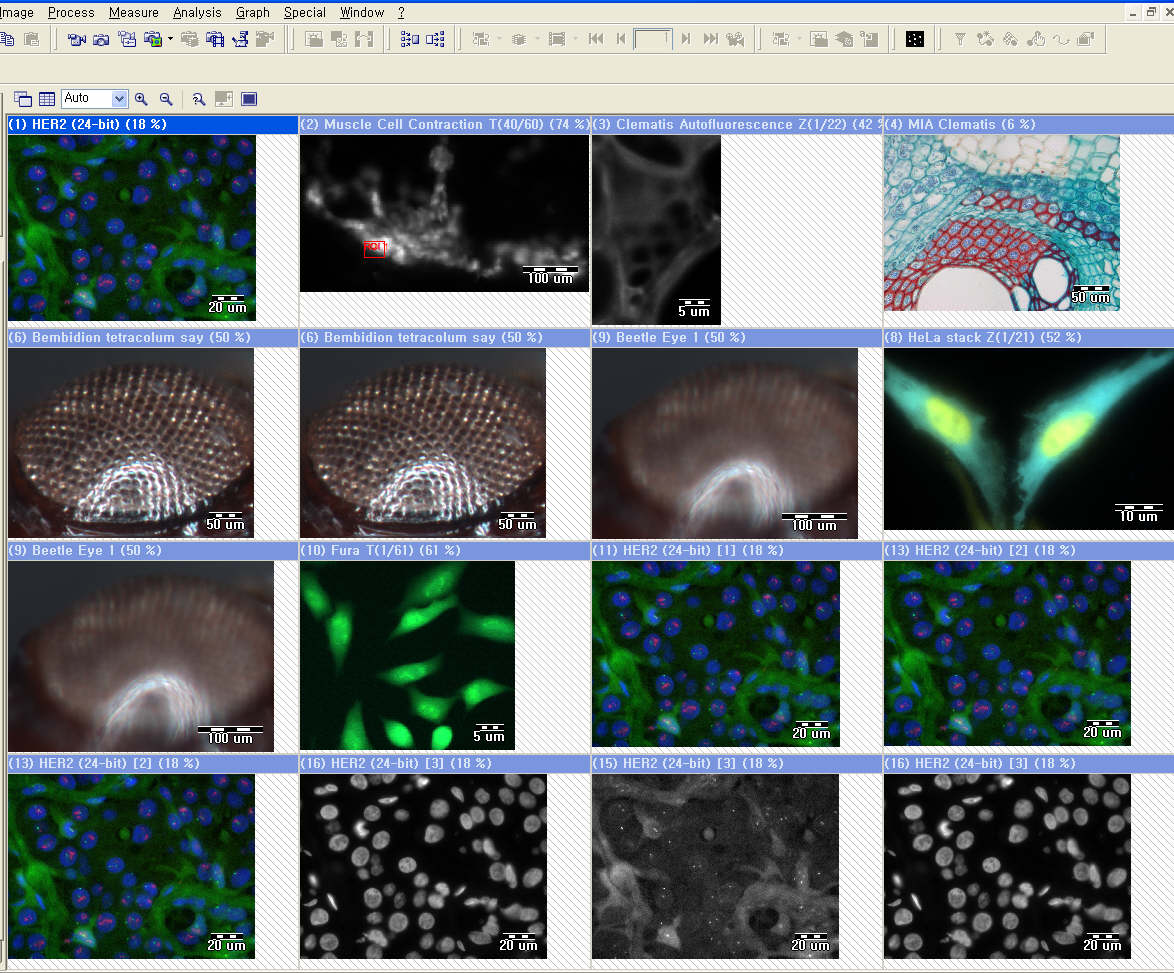
Olympus 및 OLympus Soft Imaging Solution의 모든 현미경용 카메라를 지원하며 완벽한 알고리즘을 통해 뛰어난 영상을 재현합니다. 이를 통해 획득한 영상은 최대 16장까지 동시에 비교 분석이 가능하면 동일 배율 지원, 동일 위치 지원과 같은 최상의 분석 기능을 제공합니다.
[동시비교-최대 16이미지]
Simple measurement
단순거리 측정, 수동 카운트, intensity 분석, 면적 분석 등과 같은 기능이 지원 됩니다.
Multi-channel fluorescence
염색된 각각의 대상의 이미지를 한장씩 획득하여 하나의 이미지로 합성하여 쉽게 원하는 영상을 획득할 수 있습니다.
(olysia 홈페이지에서 동영상 파일 옮기기!)
analysisFive LS Report
analysisFive LS Report는 Starter의 모든 기능을 report작성, 이미지, 데이타의 데이타 베이스화 기능을 수행 할 수 있습니다.
Archiving(데이타 베이스)
새로운 STructured ARchive (STAR) database 는 이전의 Microsoft Access-style database를 대체합니다. 특히 Windows Explorer-type tree 구조에서 이미지 찾기를 보다 쉽게할 수 있도록 하였습니다. Database Assistant를 이용하여, database 구축을 쉽게할 수 있고 고급 기능을 통해 사용자의 취향에 맞는 정리가 가능합니다. 드래그와 드롭만으로 이 모든 기능이 자동으로 이루어 집니다. 그리고 모든 이미지는 사전에 정해놓은 폴더에 자동으로 저장할 수 있습니다.
(olysia 홈페이지에서 이미지 파일 옮기기!)
STAR databases can be queried in a variety of ways:
•
simple queries of one or more fields with logical Boolean strings and wildcards
•
free queries
•
SQL queries
데이타 베이스는 네트워크를 통해 자동 저장, 백업이 가능합니다.
(olysia 홈페이지에서 이미지 파일 옮기기!)
analysisFive LS Research
analysisFive LS Research는 Report의 모든 기능과 motorized 현미경 제어, new measurement, MIA, EFI 의 기능을 수행합니다.
Microscope & Hardware control
Olympus 현미경 BX61,IX81,SZX12/SZX16를 프로그램에서 제어할 수 있습니다.
이를 위해서는 하드웨어 마법사를 실행하여 motorized 현미경 장치-대물렌즈, 필터, 큐브(형광, dic), 콘덴서-를 구성하고 이는 프로그램 내부의 컴퍼넌트 리스트에서 쉽게 선택할 수 있습니다. 또한 여러 사용자마다 원하는 구성을 셋업도 할 수 있고 한번 셋업된 후에는 프로그램 작동만으로 모든 하드웨어들도 함께 자동으로 제어할 수 있습니다. 이를 통해 형광, 위상차, 편광, DIC 같은 여러 관찰도 한번의 셋팅과 클릭으로 편하게 사용할 수 있습니다.
(olysia 홈페이지에서 이미지 파일 옮기기!)
현미경 대물렌즈를 바꾸면 프로그램은 렌즈의 배율을 자동적으로 읽은 후 알맞은 스케일바를 이미지에 보여줍니다. 그리고 Z축이 motorized 되어 있으면 렌즈 변환시에도 촛점 거리를 자동으로 맞출 수 있습니다.
다음 회사 제품의 motorized stage를 지원합니다. Prior, Ludl, Märzhäuser
다음 회사 제품의 third-party shutters 와 filter wheels을 지원합니다.Prior, Ludl, Sutter, Uniblitz
(olysia 홈페이지에서 이미지 파일 옮기기!)
New measurement
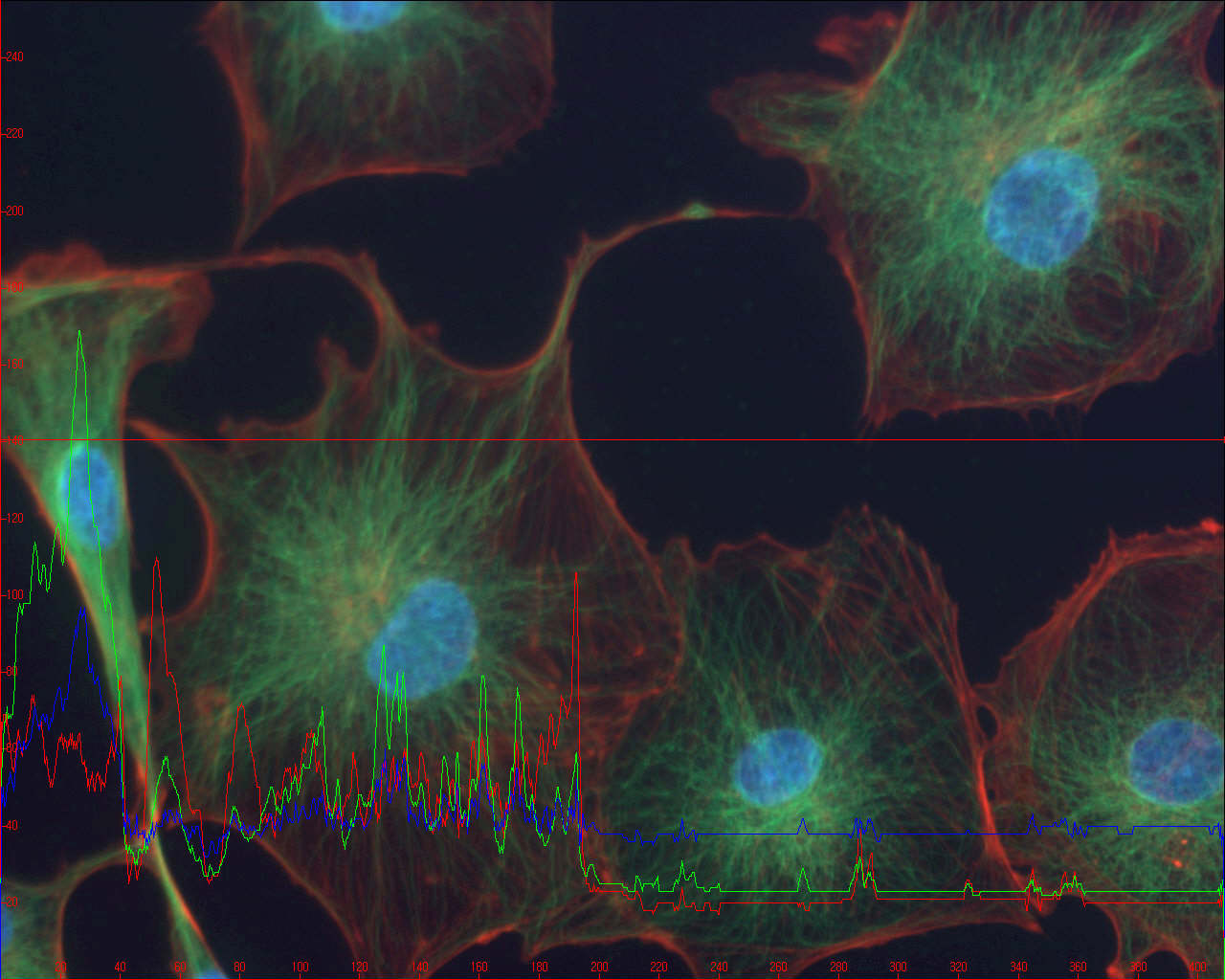
새로운 측정툴은 매직완드, 다각형 측정, 자유 측정과 같은 강력한 기능을 지원하며 측정하고자 하는 값은 113가지가 가능합니다. (길이, 넓이, 반지름, intensity 등) 또한 측정된 값들은 측정 개체별로 통계값을 바로 볼 수 있으며, 아주 간단하게 sheet로 만들어 Microsoft Excel 형식 사용할 수 있습니다.
Dual Screen System
두 개의 모니터를 사용하여 넓은 화면으로 이미지의 분석 효율이 높아집니다.
Graph
그래프 기능으로 레포트에 충실한 자료로 당신의 레포트 질을 높일 수 있습니다.
fis (Fast Image Acquisition)
고속으로 이미지를 획득하여 빠른 변화를 손쉽게 저장할 수 있습니다.
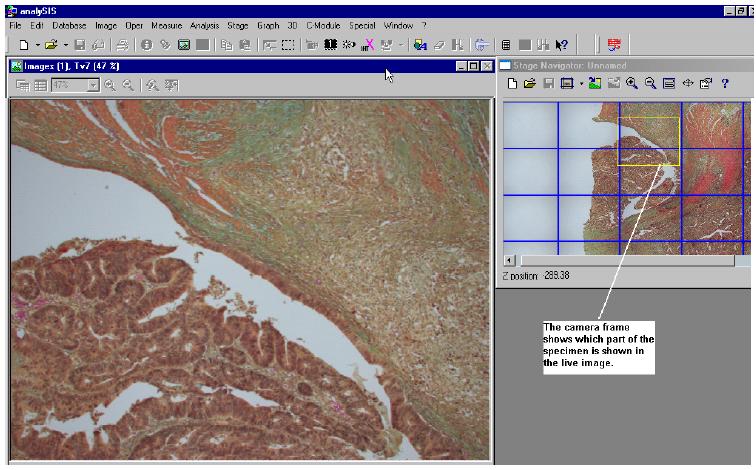
Stage Navigator
Stage Navigator를 이용하여 원하고자 하는 포인트를 지정하여 빠르고, 정확하게 확인 하실 수 있습니다.
With the Stage Navigator you can acquire overview images of a sample and use them for a precise navigation. This assures that you always know your exact location on the sample. You can recognize interesting areas in the sample, move to them in the live-image, and acquire images with a higher magnification. In the overview image, a “grid within a grid,” enables you to recognize the areas you have acquired with a higher magnification. You can deactivate this display if you want to.
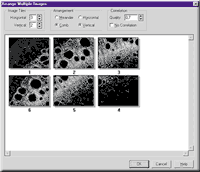
MIA (multiple image alignment) 관 여러장의 사진을 합성하여 넓은 영역을 하나의 파일로 만들어 편리한 관찰이 가능합니다.
Mia works with both monochrome and color images, supports the entire number of file formats in analySIS®, and includes an intelligent image acquisition mode with automatic calibration of the camera and camera and/or image rotation.
Once this has been defined, all you need to do is to make a decision about the required image size and resolution. Stage movement, image acquisition and the computation of the optimum overlap are done automatically by the software.
To effect the image montage, the individual images have to be aligned with sub-pixel accuracy. mia achieves this through intelligent pattern recognition techniques and plausibility checks within the overlap areas.
The resulting image has the same resolution as the individual images but is larger. It has more lines and columns. It thus represents an image that could not be acquired without mia with high resolution and large field of view.
How does Mia work?
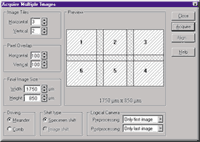
1. The integrated image acquisition control allows the automatic acquisition of individual images; image rotation and stage displacement are automatically determined.
2. This example uses six individual images for the Mia process. There are no limits to the number of images Mia can process in one session. The number of images you actually use is dependent only on the storage capacity of your computer
3. After image acquisition, you can manually determine the number, pattern and correlation of the individual images. In the case of automatic image acquisition, these parameters will be preset for you.
4. After Mia has processed the images, the overlap areas can be adjusted automatically for differences in intensity.
The result of the Mia process:
The end result (reduced to 0.7% of its actual area)
Image size: 2159 x 1062 pixels in 24-bit true color.
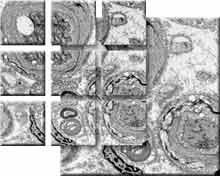
Nine image sections, each 1024 x 1024 pixels in size, automatically stiched together by the module Mia.
The high resolution 3300 x 3300 pixel sized full view image shows healthy and degenerated nerve cells.
EFI (extended focal imaging)
Focal depth 가 다른 이미지를 하나의 이미지로 합성하여 또렷한 이미지를 얻을 수 있습니다.
Microscopy at unlimited depth of focus
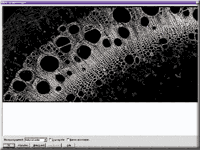
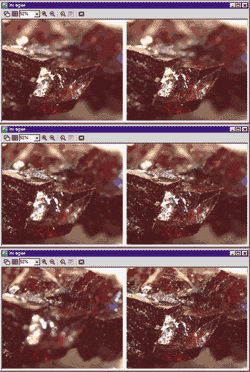
By using the efi module, you can solve a known and limiting problem of light microscopy: Microscopes in general have only a very limited depth of focus. Details which are visible in separate images with different focus settings are normally not visible in one single image.
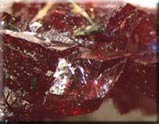
efi records images with different focus settings and extracts those parts of the image that are in focus. Mounted into a single image, these details combine to create an image with unlimited depth of focus.
efi supports the automatic montaging of both color and b/w image series. Optionally, you can reconstruct a height map from these images. Used in live mode, efi provides both a live image as well as the partially reconstructed image. Missing details can be focused interactively and added to the current image.
efi automatically aligns images that show a lateral displacement, such as if the images were taken with a stereo microscope. Anoptional motor stage control provides the added advantage of automatic image acquisition and efi processing.
Live-image and Real-time calculated recombination of image
Reconstructed image
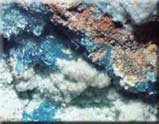
efi circumvents the physical limitations of a microscope regarding its depth of focus. A number of images are recorded, each one with a different focus setting. The parts of each image that are in focus are extracted and combined into a single, focused image.
efi allows the combination of images with lateral displacements caused by different focus settings. This is a common effect when using a stereo microscope to capture the images. Before calculating the efi image, an integrated pre-alignment step shifts the images so that they overlap perfectly. Only after this alignment has been achieved does efi calculate the final image.
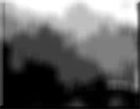
Heightmap of the reconstructed image
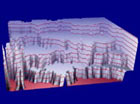
Surface reconstruction
efi image surface reconstruction combined with the heightmap
efi provides the option of calculating a height map from individual images. This height map can be used to produce a 3-D representation of the object. As an optional feature, the efi image can be used to texture the height map, creating a realistic topographic representation of the object’s surface.
A number of powerful functions for animating the 3-D structure within analySIS® enable the user to study the object from an optimal angle and position.
Live-image and Real-time calculated recombination of image
Reconstructed image
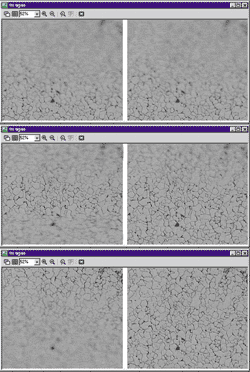
Recombination of a focus series of a metallurgical sample. The recombined efi image is necessary for conducting advanced analysis.
efi allows the concurrent visualization of the live image directly from the microscope and the current recombined image. Areas that are still unfocused can be added interactively.
A simple addition of more images, even if the original acquisition was finished, allows adding further focused details to the image.
Live-image and Real-time calculated recombination of image
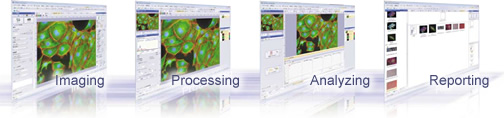
이미징의 미래에 오신 것을 환영합니다. cellSens에 오신 것을 환영합니다. 신뢰할 수 있는 영상 획득 및 저장의 영상 캡쳐 소프트웨어 혹은 자동화된 멀티 채널 이미징 연구가 필요하다면 새로운 cellSens 소프트웨어는 가치 있는 이미징 실험을 위한 최상의 솔루션을 제공합니다.올림푸스 cellSens 플랫폼은 작업의 흐름에 기반한 유일한 개별화 및 직관적인 이미징 경험을 생성합니다. cellSens로 PC 상의 아이콘들과 툴바를 통하여 간단하게 제어가능하고 생산성을 향상할 수 있습니다.cellSens는 사용하기 쉽고 강력하고 유연합니다. 모듈화 방식의 디자인으로 여러분의 예산 및 이미징 어플리케이션에 대한 대응이 쉬워 여러분의 발전된 연구와 함께 cellSens도 성장할 것입니다.
특징 및 이득
cellSens 소프트웨어는 Biological 영상의 캡쳐, 출력 및 분석을 위한 쉬운 커스터마이징이 가능한 디지털 이미징 소프트웨어 입니다. 유일한 MyFunctions 툴바와 쉽게 개인화가 가능한 desktop으로 cellSens는 여러분이 가장 필요로 하는 영상 획득 및 분석 요구에 대한 기능성, 유연성 및 측정성을 제공하는 끊김없는 작업환경을 생성합니다.
● 커스터마이징
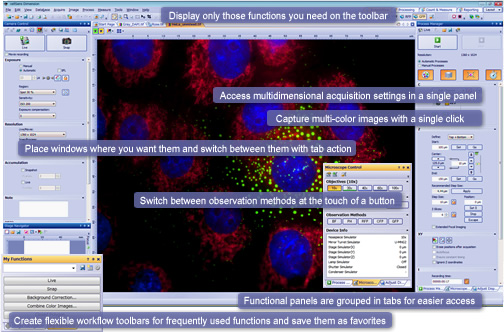
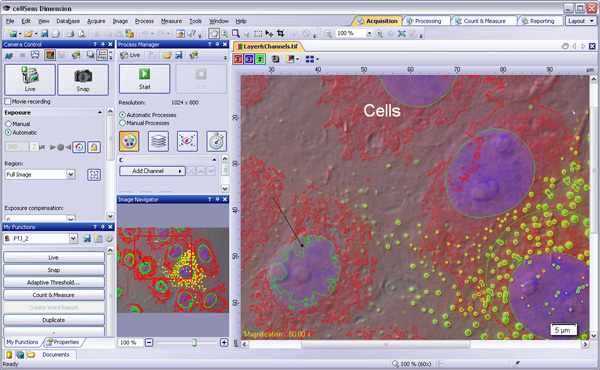
새로운 완전한 커스터마이즈 인터페이스는 사용자가 각각의 작업 흐름을 더욱 효과적인 이미징과 측정 진행 제공을 가능하게 합니다. 획득 (Acqusition), 처리 (Processing)와 측정(Measurement)를 위한 레이아웃 탭은 그러한 기능이 필요할 때 필요한 기능을 접근 가능하게 해 줍니다. MyFunctions 작업흐름(workflow)툴바는 진행 지향의 작업 흐름을 간단하고 사용하기 쉽게 만듭니다. 또한 메뉴와 툴바는 완전하게 커스터마이징이 가능하고 문서와 도구 패널 또한 각각에 맞게 재 정렬 할 수 있습니다.
● 획득 및 장치 제어
cellSens는 이미지 획득과 하드웨어 자동화 장비를 다양하게 제어합니다. 올림푸스, Hamamatsu, QImaging 과 다른 카메라 브랜드들을 지원하여 최상의 유연성을 제공합니다. 자동화된 획득 역시 간단합니다. 작업 매니저는 자동화된 올림푸스 현미경과 주변 장치들로 직관적인 Multidimensional 이미징 경험으로 바꾸어 줍니다.
Acquisition Layout에서 모든 영상 획득 기능을 쉽게 접근 할 수 있습니다.
● 영상 출력 및 처리
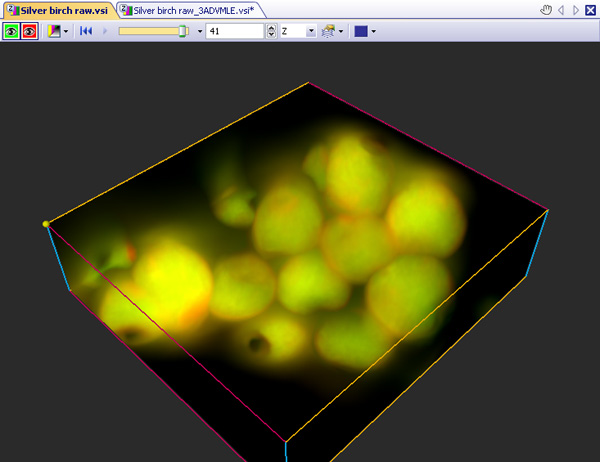
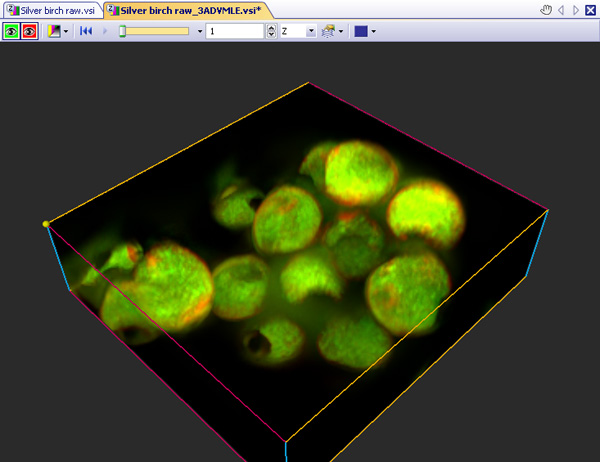
영상 출력 및 처리 도구들은 정밀하고 효율적인 이미지 분석 수행을 위한 결정적인 요소입니다. 다양한 데이터, movie playback, projection, montage 혹은 slice view와 상호 연계가 됩니다. CI Deconvolution 모듈의 Voxel Viewer로 더 나은 3D 기능을 얻을 수 있으며 multiple widefield 및 컨포컬 이미징 처리를 위한 Advanced Constrained Iterative Deconvolution 알고리듬으로 업계 최고의 속도로 최신의 현미경 영상 deconvolution 기술을 제공합니다.
다중 출력 도구로 빠르게 데이터를 리뷰 할 수 있습니다. 레이어와 채널을 on/off 토글함으로서 관심있는 데이터에 주안점을 줄 수 있습니다.
● 영상 분석
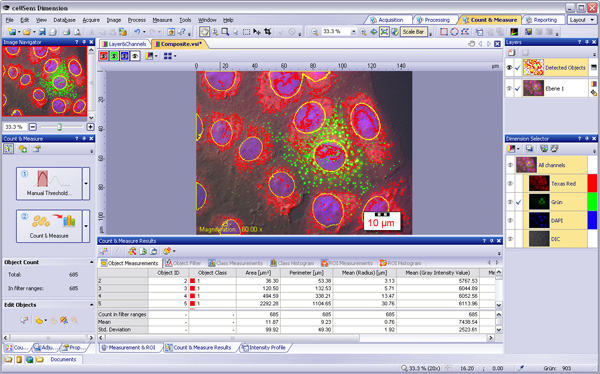
cellSnes는 기본적인 점간 측정에서 상분석부터 고급의 형상 분석 및 다중 개채 분석까지 많은 영상 분석 요구들을 처리하는 분석도구를 제공합니다. cellSens에서 사용 가능한 적절한 도구들로 Colocalization 및 Linear Unmixing를 처리할 수 있습니다.
● 협력
사용자가 대 규모의 데이터를 획득하기 위한 수집된 이미지, 측정 및 주석 정보의 저장 및 회수 기능은 매우 중요합니다. 완전하게 커이터마이즈 가능한 SQL Server Express 기반의 데이터베이스는 로컬 혹은 네트워크상에서 운용됩니다. NetCam 모듈 (연구 및 교육 용도의)은 실시간 이미지를 인터넷을 통하여 제공하여 동료와의 협력을 가능하게 합니다. Olympus 웹사이트에서 다운로드 가능한 무료의 cellSens Viewer 소프트를 사용하여 동료와 오프라인상의 협업도 가능합니다.
데이터베이스 모듈은 대용량 데이터의 관리를 단순화 합니다.
사용 가능한 패키지
cellSens 소프트웨어 – 요구와 예산의 다양성을 위한 다 단계 패키지
1. cellSens Dimension – 포괄적인 이미징 솔루션
올림푸스의 완벽한 이미지 획득, 처리, 보기 및 분석 솔루션으로 기본 패키지와 여러 개의 추가 솔루션을 제공 합니다.
유연하고 직관적인 획득 – 하나의 이미지 혹은 다채널, x/y/z 및 시간 이미지 획득 여부에 상관없이 이미지 획득은 간단합니다. cellSens Dimension의 표준 패키지는 시간간격 (Time lapse), Z-stack 및 멀티 포커스 이미지 (EFI)가 있습니다. 또한 포함된 NetCam 모듈(연구 및 교육을 위한)은 동료들에게 실시간의 실제 이미지를 스트리밍 할 수 있습니다.
완벽한 처리, 분석 및 보고서 도구 패키지 – cellsens Dimension은 kernel 필터, 개체 임계값 및 상 분율을 포함한 진보된 처리 및 분석 기능들을 제공합니다. Microsoft사의 Word을 위한 플러그인을 사용하여 여러분의 데이터로 전문적인 보고서를 생성하십시오.
이 패키지의 옵션의 확장 모듈들:- Multiposition Acquisition – Count&Measure Advanced – CI Deconvolution – Database
2. cellSens Standard – 기본 이미지 획득, 처리 및 측정
cellsens Standard는 시간간격 촬영(Time Lapse) 및 수동 몽타쥬 혹은 이미지 스티칭 (MIA) 과 같은 향상된 이미지 캡쳐 처리를 가능하게 합니다. 또한 명암 기반의 소프트웨어 오토포커스, TWAIN 입력장치로부터의 획득도 제공합니다. 이미지 주석, 처리 및 측정 도구들이 제공됩니다.
3. cellSens Entry – 기본 이미지 획득
cellSens Entry 는 현미경으로 디지털 이미지 획득 및 문서화를 원하는 연구자들의 이상적인 초석이 될 것입니다. 올림푸스 cellSens Entry는 쉬운 설치 및 모든 올림푸스 카메라로부터 이미지 획득이 가능합니다.
4. cellSens Viewer – 무료 이미지 뷰어
무료의 cellSens Viewer 소프트웨어를 사용하여 여러분의 동료와 함께 하십시오. cellSens Viewer 소프트웨어를 다운 받은 누구라도 어떠한 cellSens 제품으로부터의 획득, 측정, 주석이 포함된 이미지를 보실 수 있습니다.
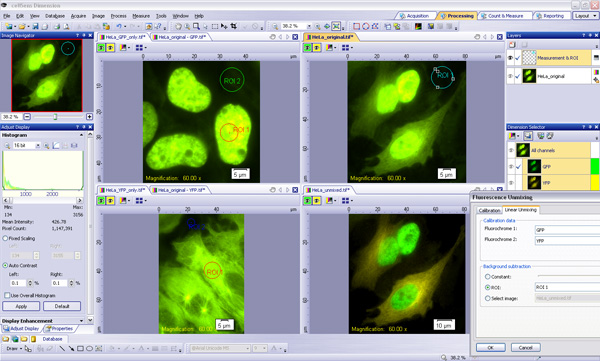
Process Manager는 현미경, 셔터, 필터 휠 및 Z축 장치들의 복잡한 획득 작업을 빠르게 해줍니다. 어떠한 조합의 다채널(multi-wavelength), Z-stack 및 시간간격(Time lapse)실험도 가능 합니다. 형광 Unmixing 및 colocalization 분석 도구로 여러분의 다채널(multi-wavelength) 영상에서 최대의 정보를 얻으십시오.
선형 Unmixing 기능의 GFP 및 YFP Unmix
2. 다중 위치 획득 (Multi-position Acquisition)
XY 모터 스테이지 제어로 이미지 획득 능력을 확장 하십시오. 다중 위치 획득은 붙여진 파노라마 이미지들의 빠른 생성을 위한 자동화된 다중 이미지 정렬을 제공합니다. 단 한번의 클릭으로 전체 스테이지 영역 혹은 다중 스테이지 위치들을 방문함으로써 기구들의 작업량 및 효율을 개선 하십시오.
3. Count & Measure Advanced
임계값 기반의 효율적이고 정밀한 개체들의 검출 및 분류, 데이터 내의 분리된 그룹들의 명확하고 효율적인 다중 요소 개체 분류를 수행 하십시오. 이 모듈은 중첩 교정된 영상의 격리된 Emission 신호 이미지의 spectral unmixing에도 적용 가능합니다.
Count & Measure Advanced 모듈은 개채 식별, 측정 및 개채 분류에 대한 완벽한 도구들을 가집니다.
4. CI Deconvolution
Constrained iterative (CI) deconvolution을 이용하여 믿을 수 없는 속도로 이미지 해상도, 선예도 및 명암을 개선 하십시오. 이 솔루션은 극강의 품질 및 deconvolution 알고리듬의 효율성을 제공합니다. 생성된 여러분의 고품질 이미지로 Voxel-Viewer 기능을 통한 진보된 3D 시각화로 탐험할 수 있습니다.
CI Deconvolution 모듈은 최신의 알고리듬과 업계 최고의 속도를 제공합니다.
5. Database
만약 대량의 이미지와 데이터를 생성한다면, 여러분의 콜렉션에서 효율적인 관리 및 검색은 핵심적인 기능 입니다. cellSens Dimsension을 위한 Database 모듈은 Microsoft SQL Server Express 2005를 사용한 클라이언트-서버 데이터베이스를 추가하여 이미지들과 관련 데이터 및 메타 데이터가 명확하게 관리할 수 있도록 합니다.
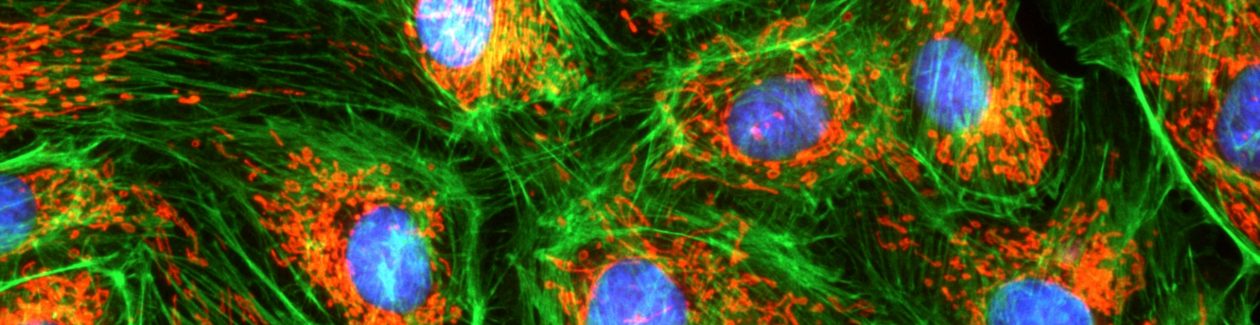
 Cell surface observation without out-of-focus blur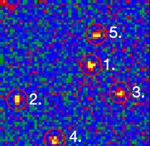


 실험을 위한 올바른 선택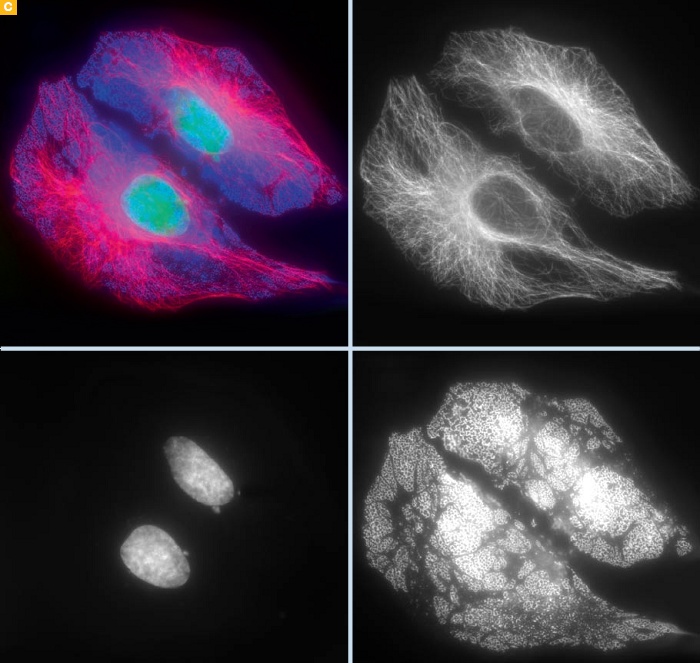
 Material Science에 적합함을 나타냅니다